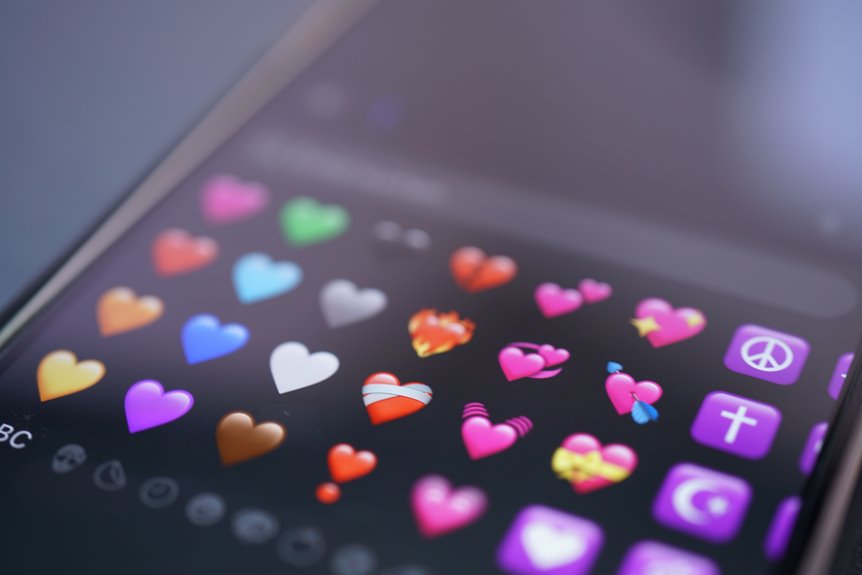
The blue heart signals trust, calm, and shared values rather than overt romance. In text, social media, and emojis, it marks reliability and open collaboration. Cultural meanings tie blue to fidelity, tranquility, and melancholy, shifting with norms and media ecosystems. Used mindfully, it conveys warmth without overstepping boundaries, balancing emotive intent with respectful phrasing. Its evolving resonance invites scrutiny of context—and what such signals demand from both sender and audience.
What the Blue Heart Symbol Really Signals
The blue heart symbol signals a clear, culturally situated message of affinity and calm, distinct from romantic love and red-heart conventions.
In contemporary discourse, it communicates trust, protection, and shared values rather than passion.
Its presence in branding signals reliability and openness.
Blue heart symbolism informs design choices; blue heart in branding reinforces calm authority, inclusive collaboration, and aspirational connectivity.
Blue Heart in Texting, Social Media, and Emojis
Across texting, social media, and emoji lexicons, the blue heart functions as a shorthand for trust, calm, and shared values rather than romantic intensity. The symbol signals blue heart symbolism in digital interactions, often reflecting reliability and solidarity. Its use depends on context and etiquette, shaping expectations; emoji etiquette governs cadence, tone, and boundaries, ensuring respectful communication amid rapid online exchanges.
Cultural and Historical Meanings of the Blue Heart
Cultural and historical meanings of the blue heart reveal how color symbolism, social norms, and media ecosystems converge to shape perception across time. The analysis traces cultural origins, where blue denotes calm, fidelity, and melancholy, and notes evolving interpretations within broader historical symbolism. Contextual gaps appear in social contexts, where blue heart meaning negotiates identity, solidarity, and imagined universality across communities.
How to Use the Blue Heart Mindfully in Messages
Blue heart usage in messages reflects a careful balance between emotive signaling and social context. In practice, readers interpret tone from phrasing, timing, and relationship dynamics, making mindful wording essential. The approach prioritizes thoughtful consent, clarifying intent to prevent gentle misinterpretations. When used, it signals warmth without overstepping boundaries, supporting transparent, respectful communication that aligns with individual freedom and mutual understanding.
Conclusion
The blue heart, hailed as a beacon of trust and calm, reveals its true color only under scrutiny. Its ubiquity in texts and posts mocks the solemn claim of genuine connection, offering polished solidarity while masking friction and distance. Yet through cultural nuance and mindful use, it can still signal inclusive intent. In the end, its sincerity remains a blue-tinged bet—worth placing, if one can endure the ambiguity of meaning that never quite lands.